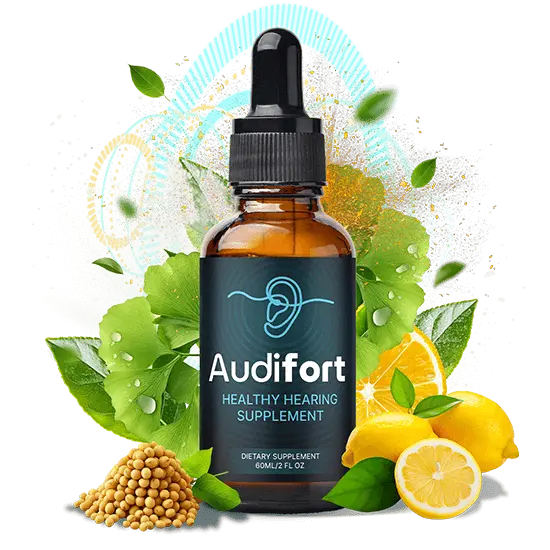
Audifort Review 2026
If you have been searching for a natural way to support your hearing, you may have come across Audifort. The product is marketed as a liquid dietary supplement designed to support hearing wellness, ear comfort, mental clarity, relaxation, and general auditory health.
But does Audifort really work? What is inside the formula? Can it help with tinnitus or hearing loss? Are there Audifort side effects? And, perhaps most importantly, is Audifort worth buying?
In this detailed Audifort review, we look at the product from several angles, including its ingredients, intended benefits, how it is supposed to work, safety considerations, customer-review claims, limitations of the available evidence, and what consumers should know before purchasing a hearing-support supplement.

Audifort Review 2026 – What is it?

Audifort is marketed as a liquid dietary supplement for hearing and auditory wellness. According to the product information supplied on its website, the formula combines botanical extracts, amino acids, and other nutritional compounds.
The manufacturer highlights ingredients including:
- Maca Root
- Grape Seed Extract
- Green Tea Extract
- Capsicum Annuum
- Gymnema Sylvestre
- GABA
- Guarana
- African Mango
- Siberian Ginseng
- Astragalus
- Coleus Forskohlii
- Grapefruit Extract
- Panax Ginseng
- L-Glutamine
- L-Tyrosine
- L-Arginine
- Beta-Alanine
- L-Ornithine
- L-Tryptophan
- L-Carnitine
The exact formula, quantities, serving instructions, and current product information should always be checked against the label supplied with the product you actually purchase.
The official Audifort website describes the product as a supplement rather than a hearing aid or prescription medicine. It also acknowledges that its claims should not be interpreted as proof that Audifort treats tinnitus or hearing loss.
This distinction is important.
A dietary supplement and a hearing device serve completely different purposes. A hearing aid can amplify or process sound. A supplement, on the other hand, provides nutrients or other ingredients intended to support normal bodily functions.
Therefore, someone experiencing significant hearing difficulty should not assume that taking Audifort can replace an audiogram, hearing aid, medical evaluation, or other appropriate hearing-care treatment.

Audifort Review 2026 – Benefit
Audifort is marketed around several potential benefits.
Hearing Wellness
The primary positioning of the product is support for healthy hearing and general auditory wellness.
The manufacturer does not present Audifort as a hearing aid. Instead, the goal is nutritional support for the systems involved in hearing.
Ear Comfort
Audifort is also marketed toward people who experience buzzing, ringing, or other forms of ear discomfort.
This is an area where consumers should be especially careful.
Tinnitus can have numerous causes, including age-related hearing changes, exposure to loud sounds, ear problems, certain medications, and other medical conditions. A supplement should not be assumed to address the underlying cause.
Mental Clarity and Focus
Several ingredients in the formula are marketed for mental clarity, energy, or relaxation.
For some consumers, this broader wellness positioning may be attractive because hearing difficulties can be frustrating and mentally tiring, particularly in conversations or noisy environments.
However, individual experiences can vary considerably.
Antioxidant Support
Grape seed extract and green tea provide compounds with antioxidant properties.
Antioxidant support is a common feature of nutritional supplements, but it is important not to turn this general benefit into an unsupported claim that Audifort can prevent or reverse hearing loss.
Relaxation
GABA and several botanical ingredients are associated with relaxation or stress support.
This may be relevant to people who notice that stress makes their experience of ringing or sound sensitivity more difficult.
Again, relaxation support is different from treating the underlying cause of tinnitus.

Audifort Review 2026 – How Does It Work?
Audifort’s marketing approach is based on the idea that hearing health involves more than simply the physical ear.
The auditory system is a complex pathway involving the outer and middle ear, inner ear structures, auditory nerves, and the brain. Once sound reaches the inner ear, signals are transmitted and interpreted by the nervous system.
Audifort therefore combines ingredients that the manufacturer associates with several areas of general wellness, including antioxidant support, circulation, nervous-system function, relaxation, and mental clarity.
For example, Grape Seed Extract and Green Tea are included as sources of antioxidant compounds. GABA is included for its role in nervous-system signaling and relaxation. Other botanical ingredients are positioned as part of the formula’s broader nutritional approach.
However, there is an important difference between an ingredient having a biological property and a finished supplement being clinically proven to treat a specific hearing disorder.
The presence of antioxidants in a formula does not automatically demonstrate that the product can reverse age-related hearing loss. Similarly, an ingredient associated with relaxation does not establish that the complete product can eliminate tinnitus.
That is why Audifort is best considered a hearing-support supplement, rather than a proven treatment for a medical hearing condition.
Audifort Ingredients: What's Inside the Formula?
One of the most important things to examine when reviewing a dietary supplement is its ingredient list.
Audifort’s published information describes a formula containing more than 20 ingredients. Below are some of the better-known ingredients highlighted in the product materials.
1. Maca Root
Maca is a plant traditionally used in wellness products for energy and vitality.
Audifort includes maca as part of its broader approach to energy and mental wellness. The product information associates it with circulation and general vitality.
It is worth remembering, however, that traditional use or a plausible biological mechanism does not automatically establish that maca improves hearing in people with hearing loss.
2. Grape Seed Extract
Grape Seed Extract contains antioxidant compounds, including proanthocyanidins.
Antioxidants are generally studied for their ability to help protect cells from oxidative stress. Audifort uses grape seed extract as part of its antioxidant and circulation-oriented formula.
This is one of the more understandable ingredients in the formula from a nutritional perspective, but consumers should still distinguish between antioxidant activity and proof of improved hearing outcomes.
3. Green Tea Extract
Green tea contains naturally occurring polyphenols called catechins.
The Audifort formula highlights green tea for antioxidant support and circulation. Green tea is also commonly included in wellness formulas because of its broader nutritional profile.
People who are sensitive to caffeine should check the product label to determine whether the particular formulation contains a meaningful amount of caffeine.
4. Capsicum Annuum
Capsicum annuum is the botanical name associated with varieties of chili pepper.
The compound capsaicin found in chili peppers has been extensively studied for its effects on sensory pathways and other biological processes.
Audifort lists capsicum as part of its botanical blend and associates it with circulation and a healthy inflammatory response.
However, this should not be interpreted as proof that capsicum can repair damaged structures within the inner ear.
5. Gymnema Sylvestre
Gymnema sylvestre is a traditional botanical commonly used in herbal and dietary supplements.
Audifort includes it in its larger ingredient combination. The product materials associate it with general nerve and metabolic support.
There is not enough information to conclude that Gymnema alone, or Audifort containing Gymnema, is an established treatment for hearing loss or tinnitus.
6. GABA
GABA stands for gamma-aminobutyric acid and is an inhibitory neurotransmitter involved in nervous-system signaling.
Audifort highlights GABA because of its association with relaxation and calmness.
This is potentially relevant because stress and poor sleep can make certain symptoms, including the perceived burden of tinnitus, more difficult for some people to manage.
Still, the presence of GABA in Audifort should not be interpreted as evidence that the supplement can eliminate tinnitus.
7. Ginseng and Other Botanical Ingredients
The published Audifort information also lists ingredients such as Panax Ginseng, Siberian Ginseng, Astragalus, Guarana, African Mango, Coleus Forskohlii, and Grapefruit Extract.
These ingredients have different traditional uses and biological properties.
The formula’s broad approach is therefore one of the product’s distinguishing features. Instead of relying on a single vitamin or herb, Audifort combines numerous ingredients into one liquid supplement.
The downside is that it can be difficult for a consumer to determine which ingredient, if any, is responsible for a perceived benefit.